
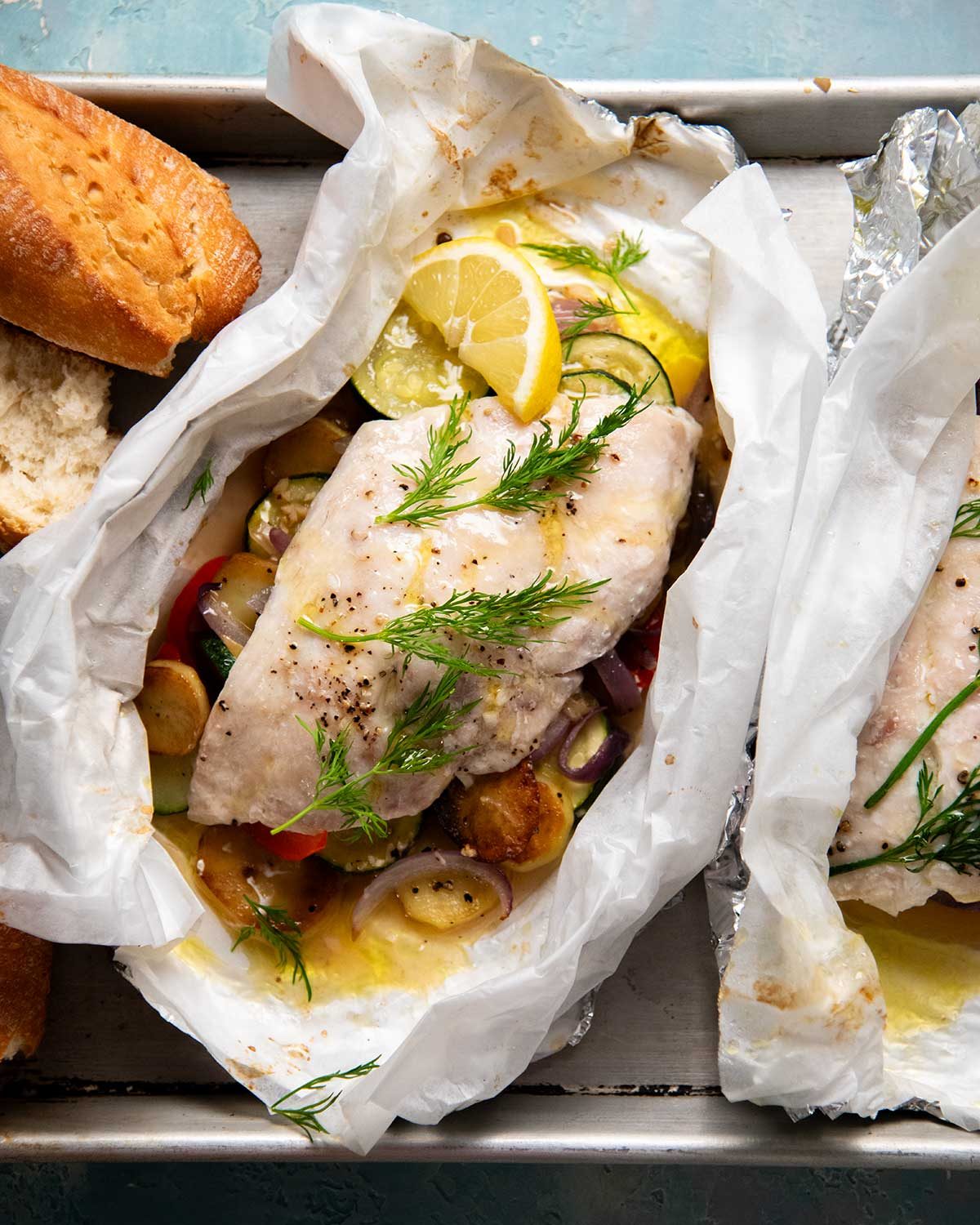
Fish En Papillote – fondly known as “Fish in a Bag” – is a classic French way of baking fish sealed in its own little parcel, where it gently steams and soaks up all the flavours tucked inside. Add a handful of garden vegetables and a splash of white wine that turns into a lovely light sauce, and you’ve got yourself a full dinner.
Nagi's Notes


If it weren’t for JB, I would have gone the rest of my life never having Fish in a Bag again. Mum used to make them regularly when I was growing up and I always thought they were soooo bland (sorry Mum! 😂)! So I’d written them off for life. But JB’s version completely changed my mind – turns out Fish in a Bag can be seriously delicious! A splash of white wine (DO NOT SKIP THIS!), a sprig of fresh herb (so many alternatives here) and most importantly, tossing the potatoes with garlic in a pan before bundling up the parcels (DO NOT SKIP THIS EITHER!!). Now I can’t stop making these. So healthy, soooo delicious!

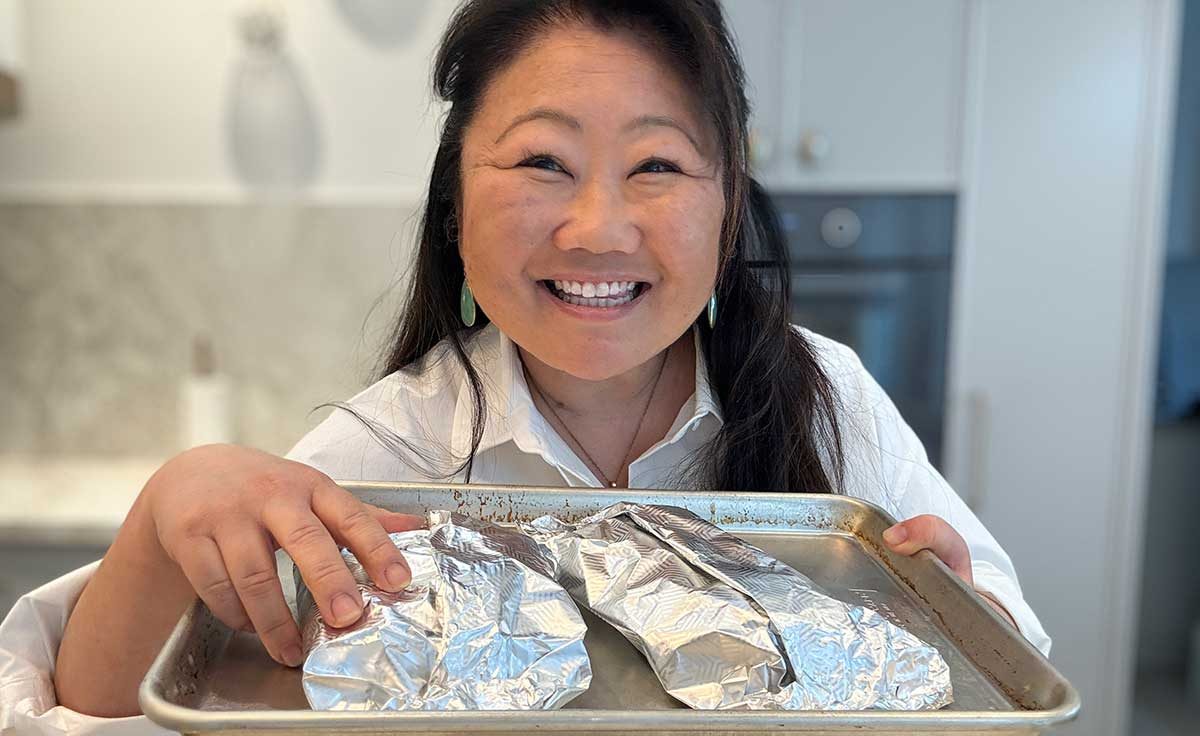
Fish En Papillote
En papillote is a classic French home cooking technique. “Papillote” means “enveloped in paper” and we do exactly that – wrapping food in paper so it steams in its own juices, cooking the food through gently and infusing with the flavours inside the parcel.
Today I’m sharing the fish version which is the most famous. This method of cooking is ideal for fish because it’s a delicate protein and takes on flavours it’s cooked with very well. I like to use both garden vegetables as well as potatoes to make it a satisfying meal, though I can never resist a bit of warm bread to mop up the juices.
You might have already spied that I use foil as well as paper! Though perhaps not considered strictly traditional, the foil makes it much easier to seal securely and ensure it doesn’t open up while in the oven.
Ingredients In Fish En Papillote
I’ve used snapper today but you can use almost any firm white fish fillet. I’ve provided guidance below.
1. The fish
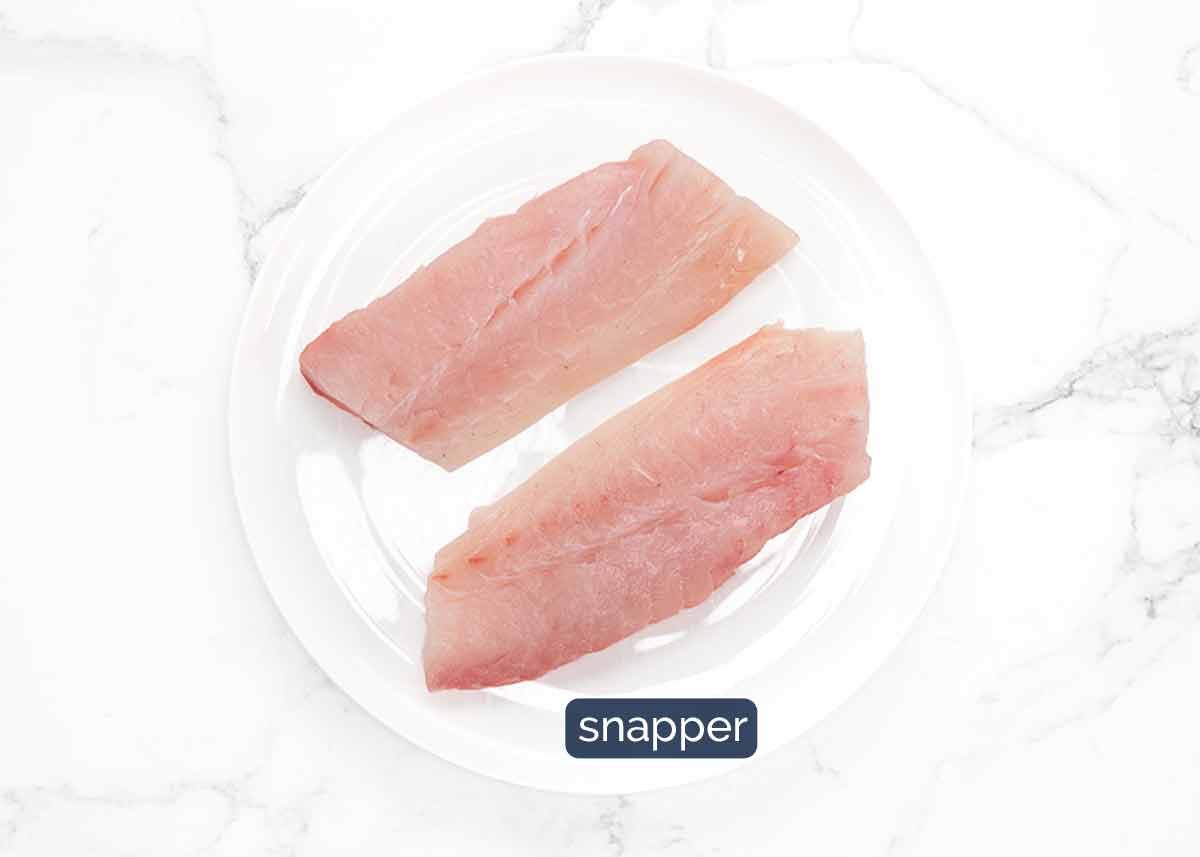
This recipe works best with white fish fillets around 1.5cm (0.6″) thick. Too thin and they’ll overcook before the vegetables are ready, too thick and the fillet won’t be wide enough to nicely cover the vegetables underneath. More of an aesthetic issue than a cooking one, but worth keeping in mind for how the parcel looks once it’s opened.
For me personally, I like to use snapper. It’s a firm favourite here in Australia, loved for its mild, sweet, delicate flavour. The flesh is moderately firm and because the fillets are flat with an even thickness, they cook through beautifully and evenly. See below for other suitable fishes.
Best fish for “Fish en Papillote”
Australia: Barramundi, Blue eye cod / Trevalla, Basa, Bream, John Dory, Ocean perch, Orange roughy (Nagi’s favourite!).
New Zealand: Blue cod, Tarakihi, Gurnard
US: Above and below listed, plus Alaskan pollock, Tilapia, Mahi-mahi.
UK: Above listed, plus Hake, Pollack, Sea bass, Turbot.
Salmon and ocean trout will work too, though it’s not the most aesthetic when steamed (in my personal opinion).
Fish to avoid
Avoid fish that are dry out quickly when cooked (swordfish, tuna, kingfish, marlin) and oily fish like sardines and mackerel.
2. everything else
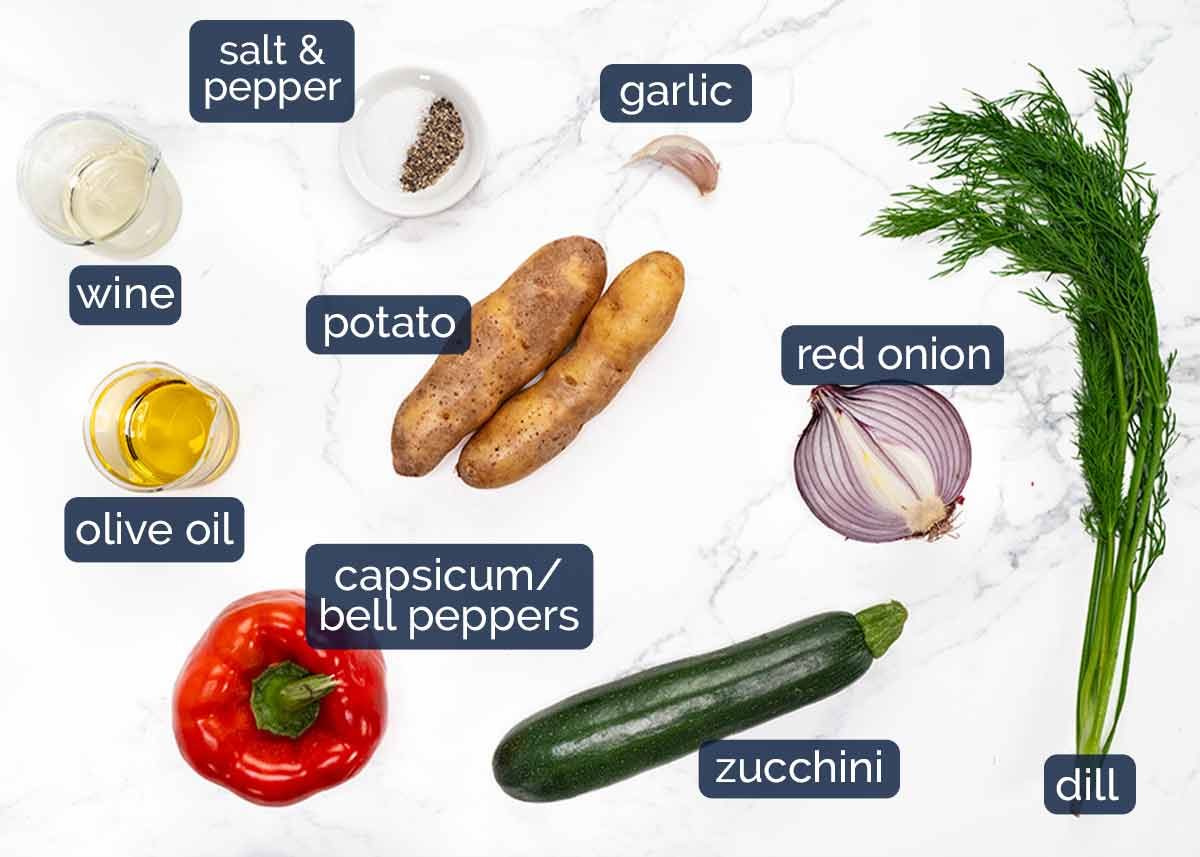
Kipfler potato (fingerlings potato) – Finger-shaped gourmet potato (I buy mine at Harris Farms here in Sydney). They have a natural buttery texture and hold their shape beautifully once sliced and cooked. Regular baby potatoes work fine too if you can’t find kipflers.
If you prefer to make yours low-carb, you can leave the potato out and use more vegetables instead.
Red capsicum / bell pepper – Adds a touch of sweetness and colour once it softens in the parcel. Yellow or orange capsicum work just as well if that’s what you’ve got.
Zucchini – Get a medium size one. It will soak up all that dill and wine flavour as it steams.
Red onion – Cut into wedges rather than slices it mellows out beautifully with the gentle steam cooking.
Dill – A common herb used for Fish En papillote. A few sprigs of fresh dill really elevates this otherwise simple dish as the flavour gently infuses through everything as it bakes. Fresh tarragon could also be used.
I can’t think of another fresh herb that brings a similar thing into this dish (dried dill just won’t give you the same result.). So if you don’t have dill or tarragon, adding fresh shavings of fennel into the vegetables would be lovely to take the place of fresh herbs. Otherwise, my next best suggestion is to toast then grind 1/4 teaspoon of fennel seeds and sprinkle it over the assembled fish and vegetables just before sealing.
Garlic – Just a single clove, finely minced, enough to round out the vegetables without overpowering the delicate fish.
White wine – I like a chardonnay here, it’s what I’ve always reached for since my restaurant days. A cheap one will do, nothing fancy needed here. It infuses into that light sauce as it combines with the fish and vegetable juices. If you’d rather skip the alcohol, a non-alcoholic wine or a splash of low-sodium vegetable stock will do the job.
Extra virgin olive oil – Used both for sautéing the potatoes and drizzled over the fish before sealing the parcels.
Salt – Cooking salt / kosher salt (half for table salt, 50% extra for flakes).
Pepper – Regular black pepper.
How To Make Fish En Papillote
While I know it is common to see recipes piling raw vegetables into the parcels, because I like to include potatoes in mine so it’s a complete meal, the potatoes need to be sautéed first to give them a head start.
And as mentioned earlier, again perhaps not what you’re used to seeing, using foil as well as paper makes the parcels more secure and easier to fold. However, in the video, I also show you the best way to make the parcels using just paper.
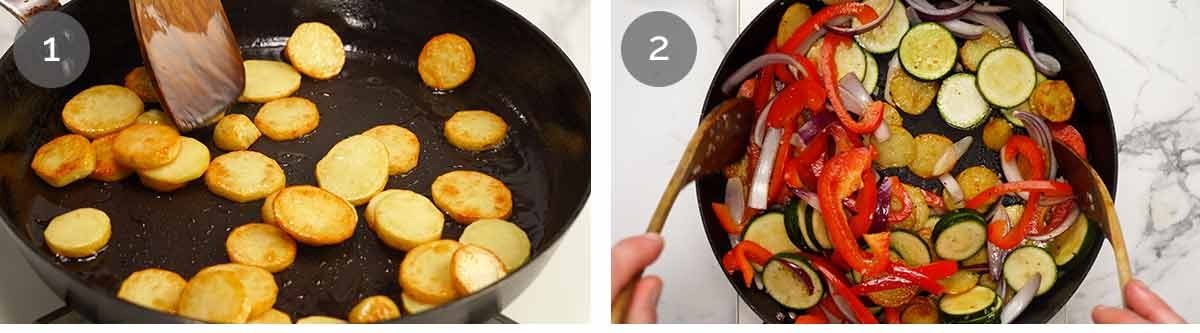
Sauté the potatoes – Heat the oil in a skillet over medium high heat, add the potatoes and cook for about 4 minutes, stirring regularly. Use two wooden spoons, if you find it easier. You want them picking up a little golden colour but not going fully crisp, they’ll finish cooking inside the parcel.
Toss with vegetables – Add in the zucchini, capsicum, red onion, garlic, half the salt and pepper and toss everything together for about a minute. Then set it aside off the heat.
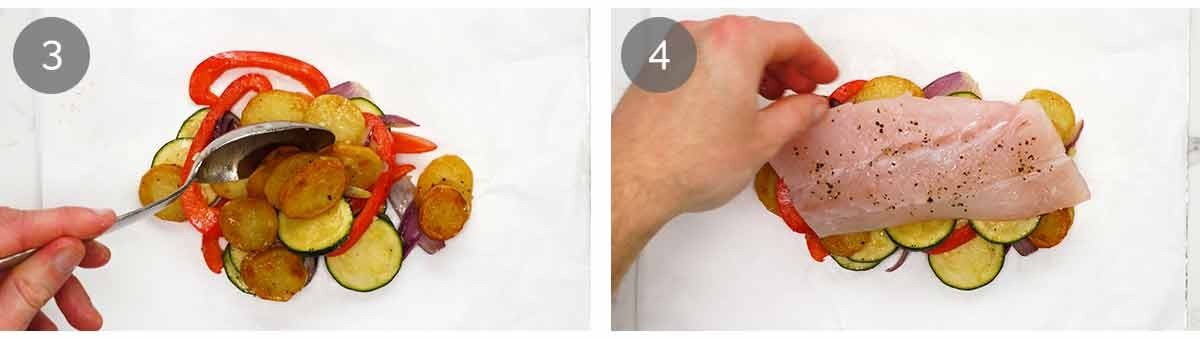
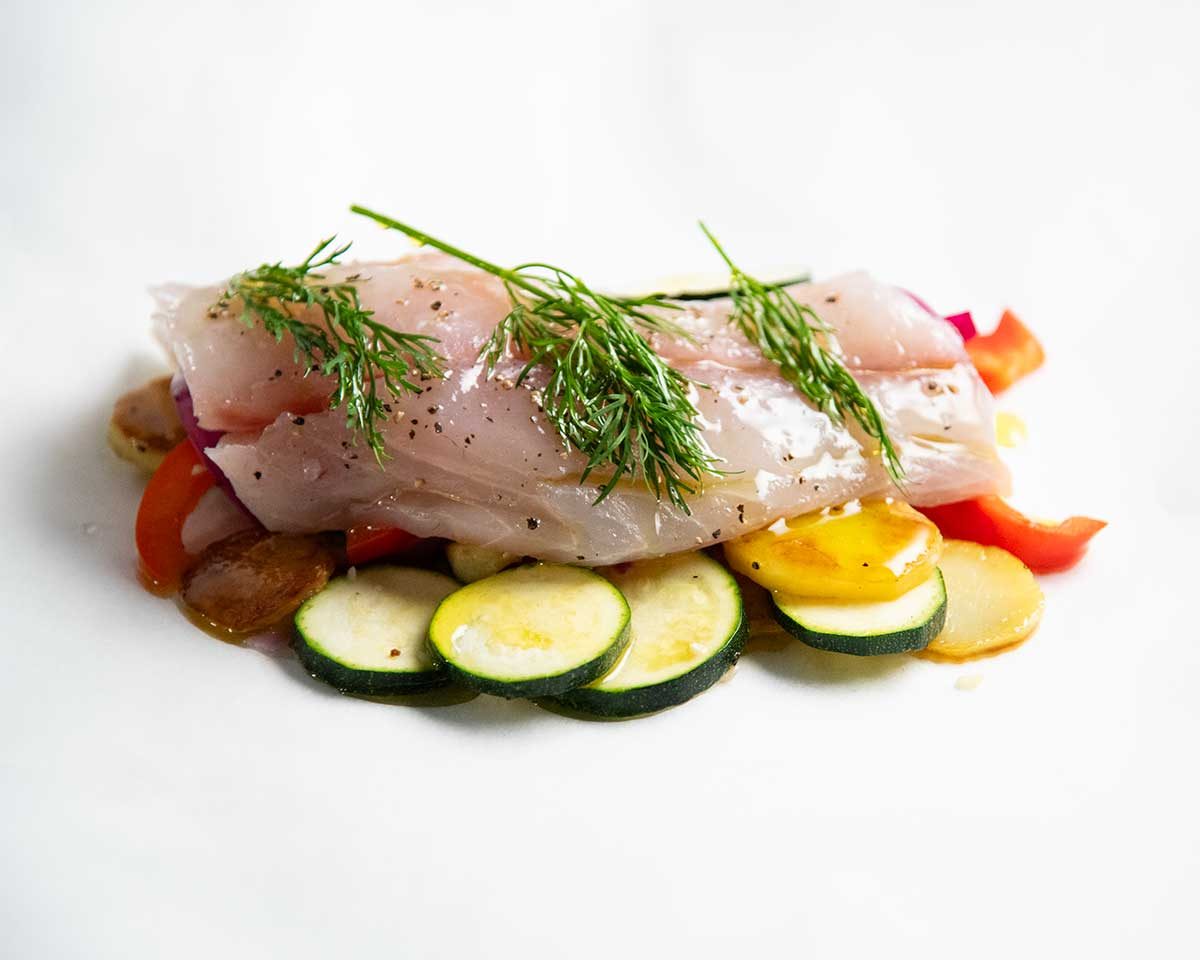
Building the parcels – Lay out two pieces of foil down first (50cm / 20″ long x 30cm / 12″ wide), then top with a piece of baking paper/parchment paper on each (40cm / 16″ x 30cm / 12″). Divide the vegetables evenly between the two, and mound them right in the centre of the paper.
Fish – Pat the snapper fillets completely dry with paper towel first, season both sides with the remaining salt and pepper, then lay one fillet on top of each mound of vegetables.
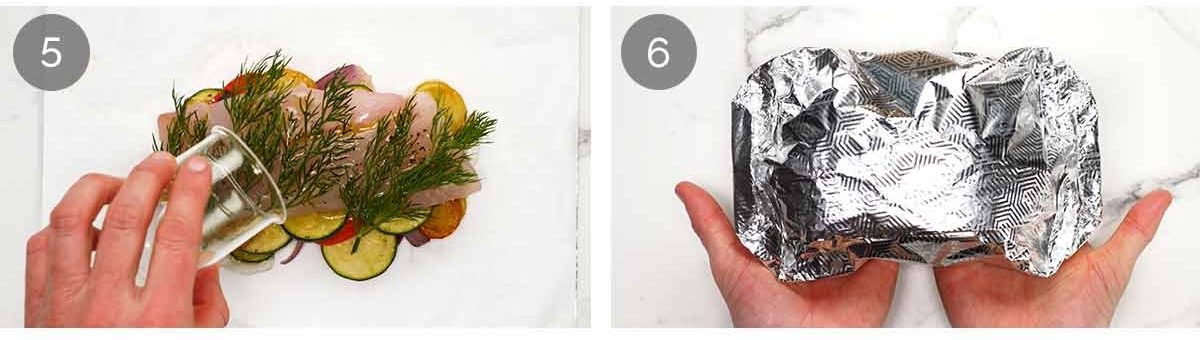
Add the aromatics – Top each fillet with 3 sprigs of dill, then drizzle the remaining olive oil over and pour a tablespoon of white wine over each parcel. That wine and oil mingling with the fish juices as it bakes is what creates a light, delicate sauce right there in the parcel.
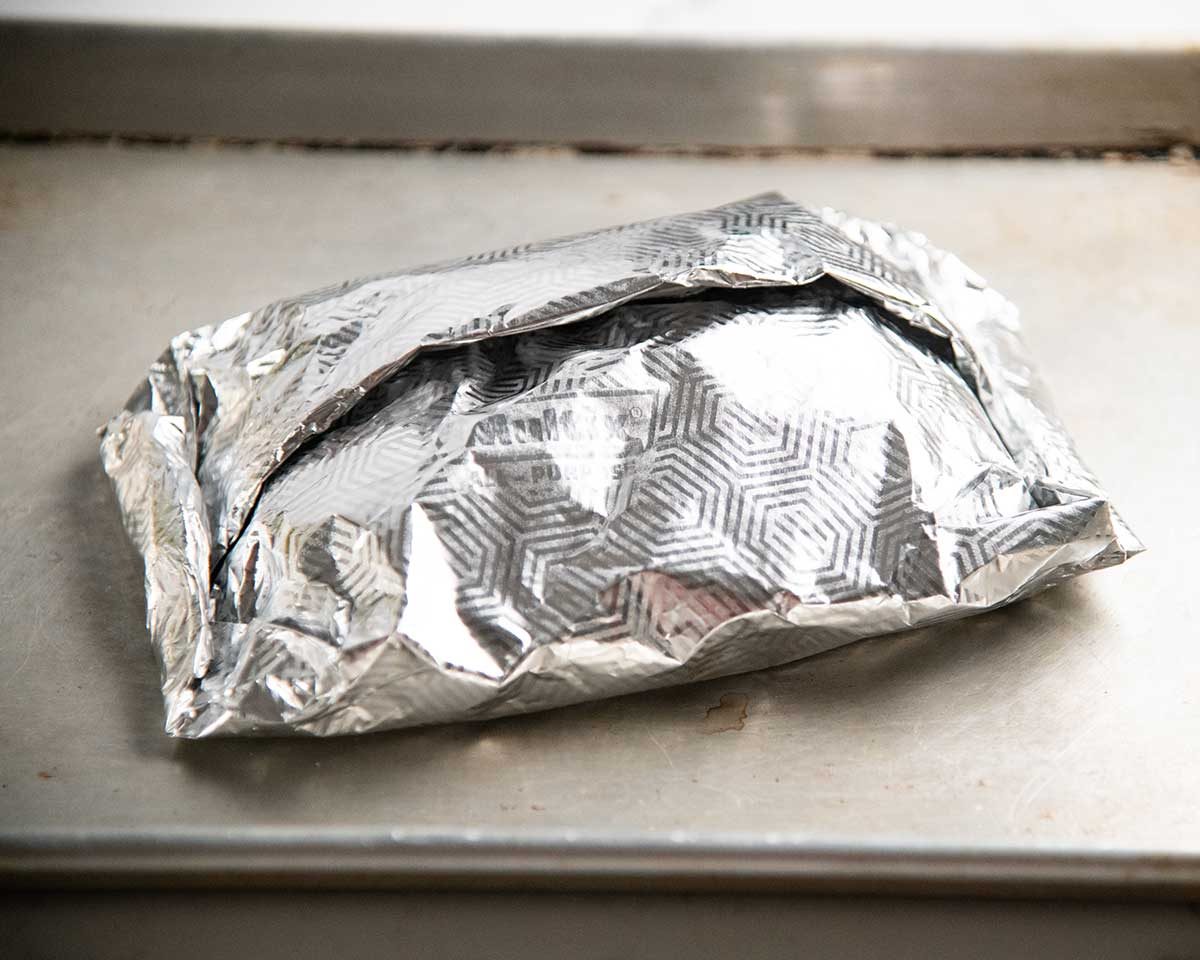
Fold and seal (the video is helpful) – bring the short edges of the foil and paper together and fold over twice to seal that side. Press down gently along the fold to flatten it. Then, on one end, fold each corner in to form a triangle and fold it over twice more to lock the seal, and repeat on the other end, taking your time since a good seal is what traps the steam.
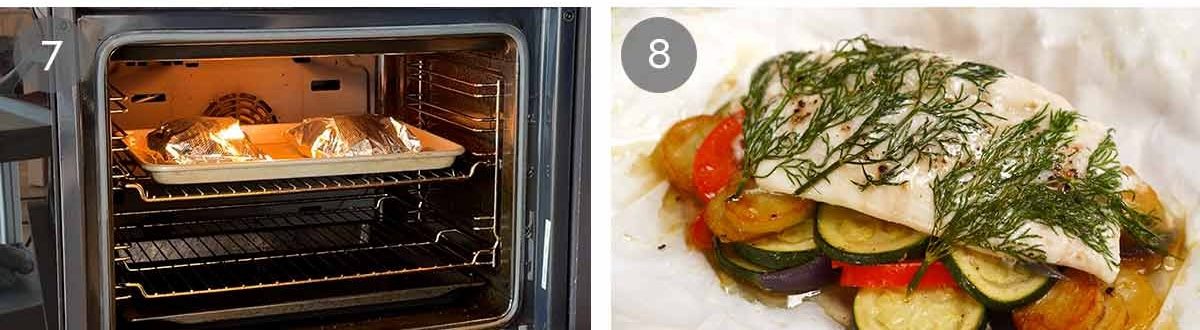
Bake and rest – Place the parcels on a tray and bake for 18 minutes at 190°C / 375°F (170°C fan-forced), you’ll notice them puff up slightly as they cook, that’s the steam building inside.
Rest – Take the parcels out and let them rest for 3 minutes before serving. This helps finish infusing the flavours into the fish and sauce. (Once cooked the core fish temperature should read at least 55°C / 130°F.)
How To Serve Fish En Papillote
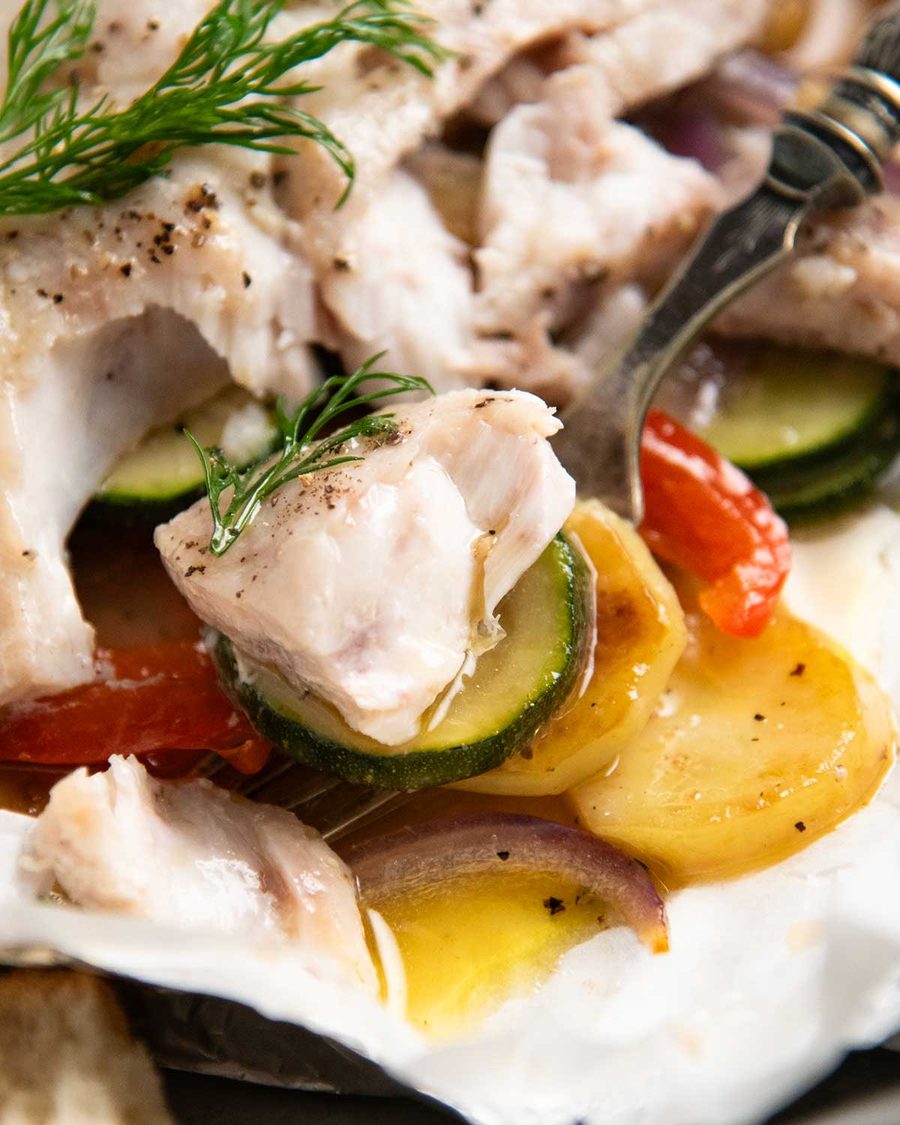
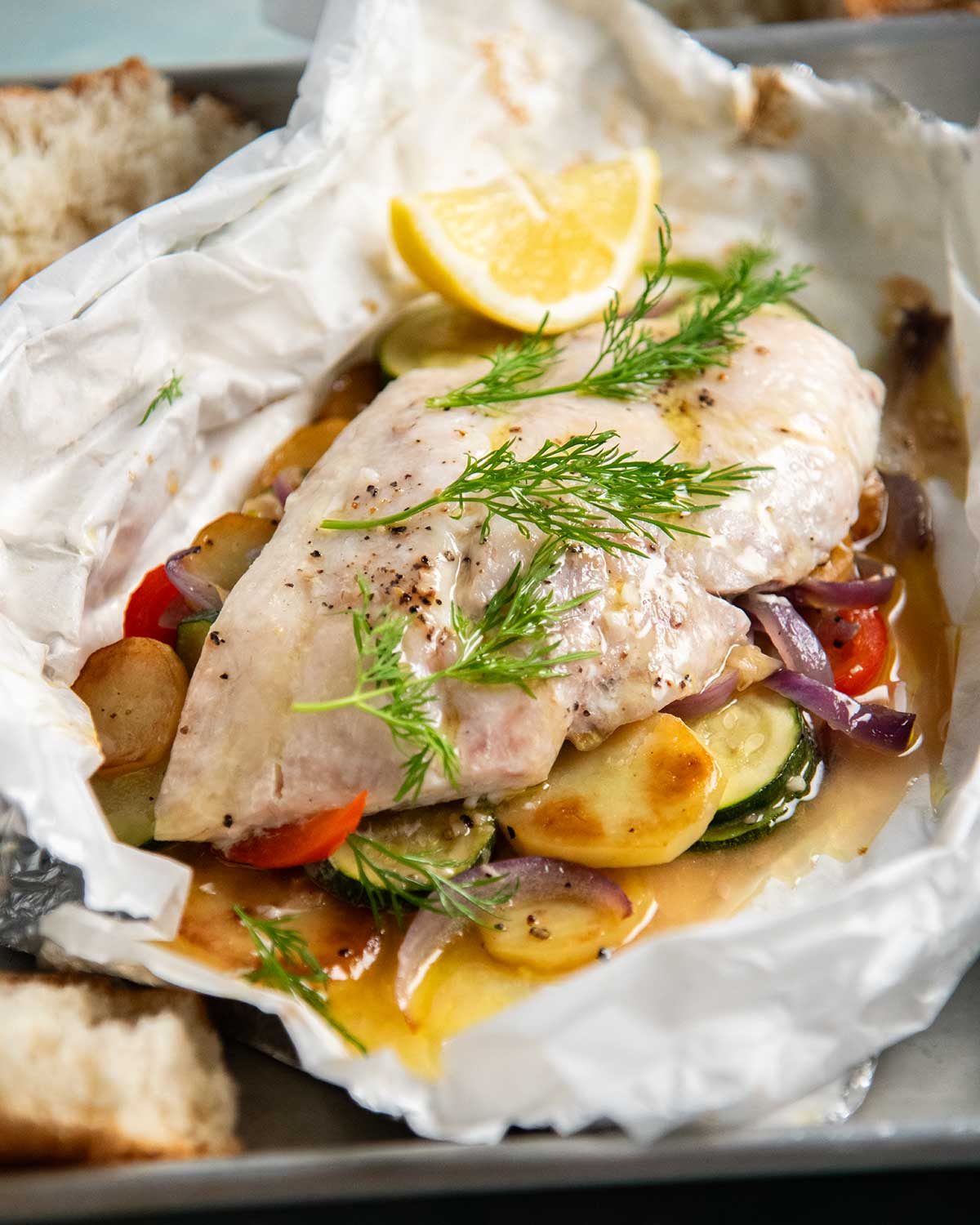
Place the parcels on a plate, still sealed. Let everyone open their own parcel at the table and enjoy the fresh smell of the dill and steam coming out of it – that’s half the fun! And it’s designed to be eaten straight out of the foil, don’t try to transfer it onto a plate.
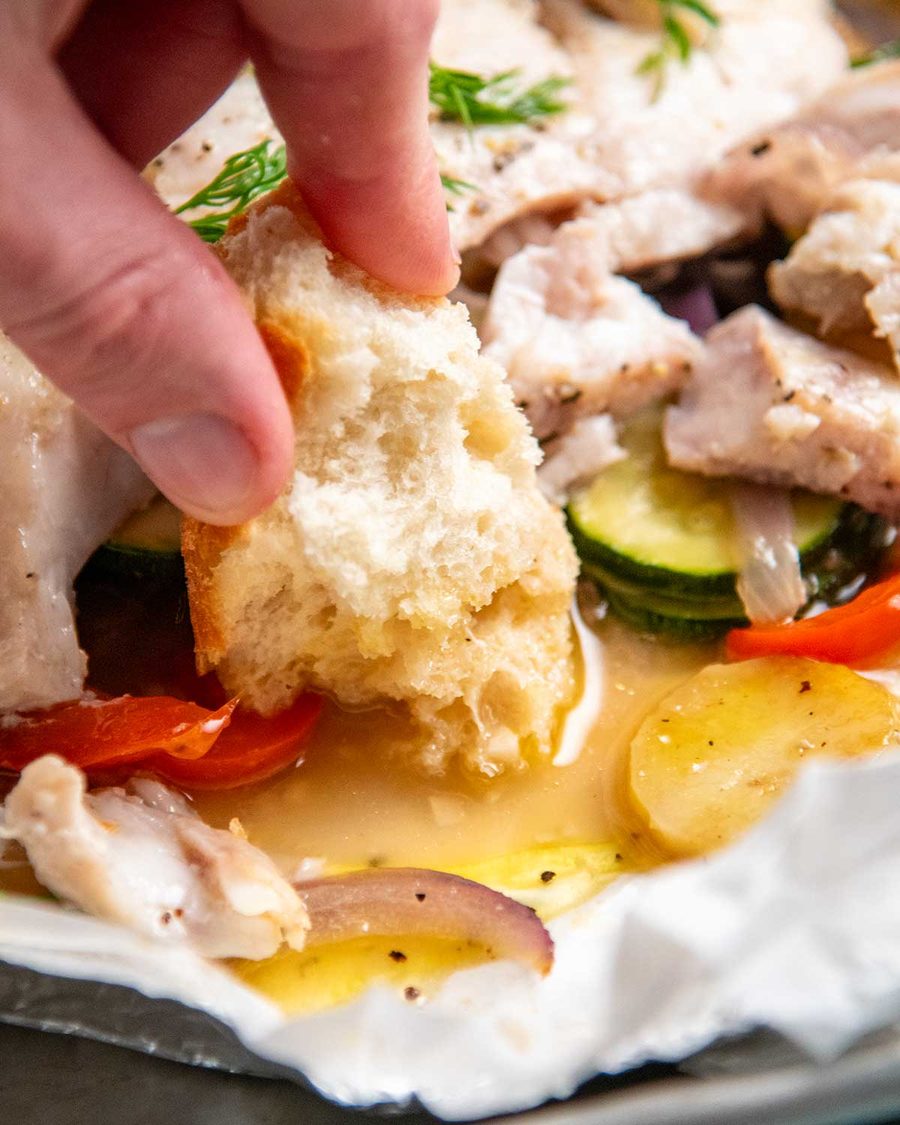
A squeeze of lemon and a crusty bread is non negotiable for me, you need something to mop up that dill and wine sauce pooling in the bottom.
I hope you enjoy this one, it’s the kind of dish that makes a weeknight feel just a little bit special without asking much of you at all. I’m sure it will win you over! Bon appétit! – JB
FAQ – Fish En Papillote
Yes, almost any similar sized white fish fillet works. See Recipe Note 1 for a full list depending on where you’re shopping.
Potatoes are the densest thing in the parcel, so without a head start in the pan, they’d still be a little firm by the time the fish is cooked. The 4 minutes sauté gets them most of the way there, and the steam in the oven finishes the job.
Yes, just swap the wine for a non-alcoholic wine or a splash of low-sodium vegetable stock, either one still gives you that light sauce infusing through the fish and vegetables as it steams.
I know it’s not strictly traditional but the foil makes it much easier to seal securely and ensure it doesn’t open up while in the oven. You will see in the video that I also demonstrate how to seal the package using just paper, no foil, and it does require a little more technique.
You can prep the individual elements ahead, including sauté the potatoes and toss through the vegetables, ready to go straight into the parcel when you need them. I wouldn’t recommend assembling the full parcels more than an hour before eating because if you do, the fish will start releasing moisture once it’s sitting against the salt and wine, and you’ll lose that evenly cooked texture you’re after.
Watch How To Make It
Hungry for more? Subscribe to my newsletter and follow along on Facebook, Pinterest and Instagram for all of the latest updates.
Fish en Papillote (Fish in a Bag)
Ingredients
- 2 snapper fillets (160g / 5.6oz each) , skin off, pin boned (or other fish fillets, see Note 1)
- 3 tbsp extra virgin olive oil , separated
- 200g / 7oz kipfler potatoes (fingerling potatoes) , peeled and sliced 0.5cm / 0.2" thick – 2 medium (or baby potatoes)
- 1 zucchini , sliced 0.5cm / 0.2″ thick
- 1 red capsicum (bell pepper) , cut in half, cored then sliced 0.5cm / 0.2" thick
- 1/2 red onion , cut into wedges 0.3cm / 0.1″ thick
- 1 garlic clove , finely minced
- 3/4 tsp cooking salt / kosher salt , separated (half for table salt, 50% extra for flakes)
- 1/4 tsp black pepper , separated
- 6 dill sprigs (Note 2)
- 2 tbsp chardonnay or other dry white wine , (sub low-sodium vegetable stock/broth) (Note 3)
Serving:
- Lemon wedges
Instructions
Abbreviated Recipe
- Pre-heat oven to 190°C / 375°F (170°C fan). Sauté potatoes for 4 min, then add remaining vegetables, salt, pepper and toss briefly. Divide vegetables between parcels, top with seasoned fish, dill, oil and wine. Seal the parcels and bake 18 min, then rest 3 min before opening.
Full Recipe
- Preheat oven to 190°C / 375°F (170°C fan-forced).
- Cook potato – Heat 2 tablespoons of the oil in a non-stick skillet over medium-high heat. Add the potatoes and cook for 4 minutes, stirring regularly (use 2 wooden spoons if needed). They should pick up a little colour but not too much.
- Cook the rest of vegetables – Add the zucchini, capsicum, red onion, garlic and half of the salt and pepper. Toss everything together for about 1 minute, then set aside.
- Place two pieces of foil on your work surface (50cm / 20" long x 30cm / 12" wide), then top with a sheet of baking paper/parchment paper (40cm / 16" x 30cm / 12"). Divide the vegetables between the two, placing them in the middle. (Note 4)
- Fish – Pat the snapper fillets dry, season both side with the remaining salt and pepper, then place on top of the vegetables.
- Place 3 dill sprigs on top of each fish. Drizzle with the remaining olive oil and pour 1 tbsp of white wine over each.
- Build the parcels (video is helpful here) – Bring the short edges of the foil and baking paper together and fold over twice to seal that side. Press down gently along the fold to flatten it. Then, working on one end, fold each corner in to form a triangle, then fold that triangle over twice more to lock in the seal. Repeat on the other end so both ends are sealed the same way. Redo the same with the other parcel.
- Bake & rest – Place the parcels on a baking tray and cook for 18 minutes. Remove and let rest for 3 minutes. (Once cooked, the core fish temperature should read at least 55°C / 130°F.)
- Serving – Grand opening time! Open the parcels, watch the steam escape, squeeze some lemon juice over and eat while hot with some crusty bread on the side.
Recipe Notes:
Nutrition Information:
Life Of Jaffle
Jaffle got to join me for lunch as I was tasting one of the final version of the dish, or at least, join me at the table. Onion and garlic mean this one’s a no-go for him so he had to settle for watching me while I enjoyed my fish en papillote outside.
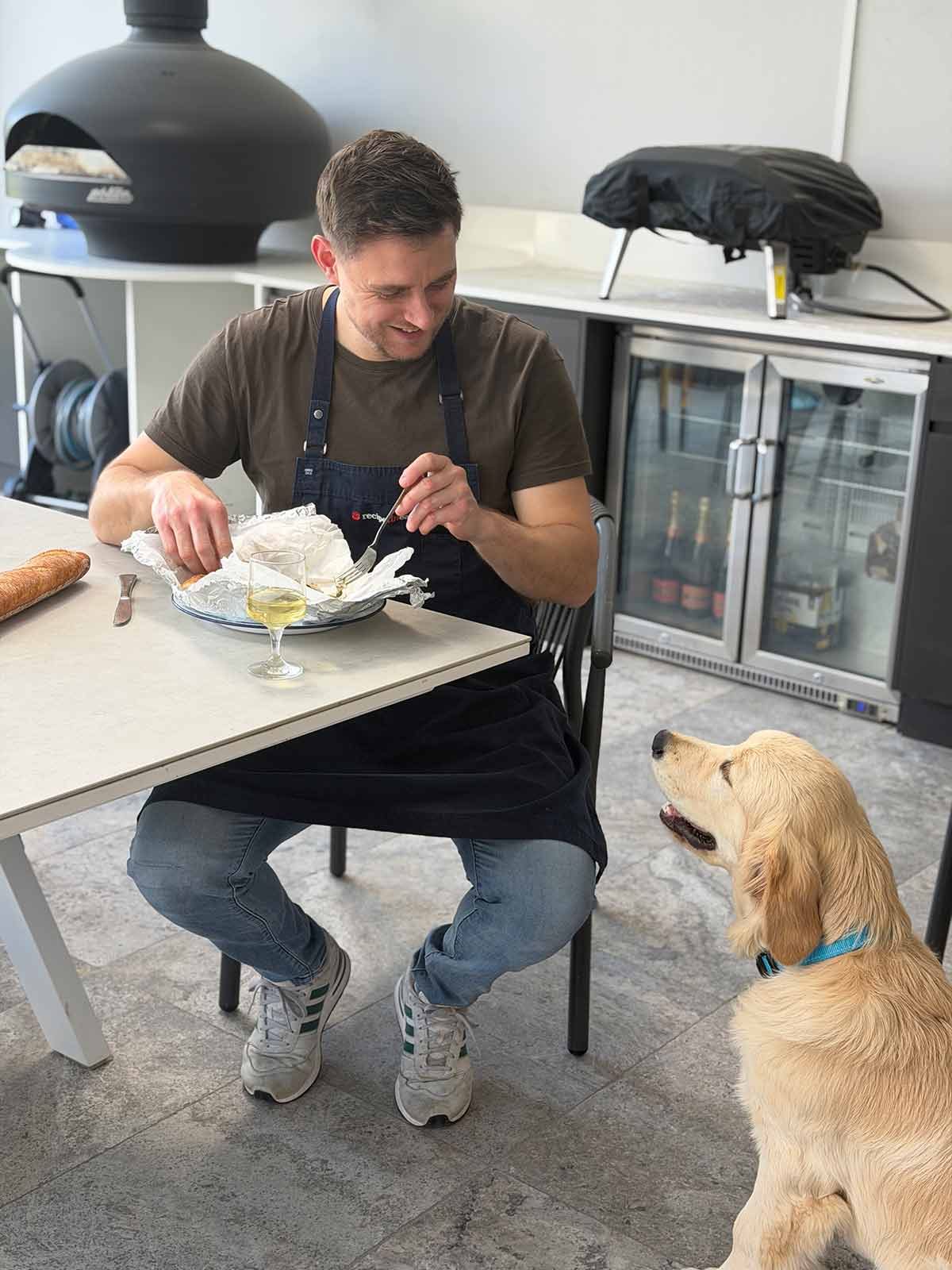
To make it up to him, I took him out to the park for one of our walks, and honestly, judging by that face, a good walk might just be an even trade for missing out on lunch!

This is one of the first misses for me from rte, which is unfortunate,I thought it had potential, but it really just lacked flavour. Also took 40 in the oven to get to temperature for a 300g fillet of snapper.
Hi Daniel, I’m sorry to hear this one didn’t work out for you. The recipe calls for 160g per fish fillet, so a 300g fillet would naturally take longer to cook. I’ve updated the recipe to make the fillet size clearer.
Absolutely delicious and cooked to perfection. I think the wine gave it a nice touch. I also added a bay leaf which was a hit. Thanks JB and Nagi
Thank you Katerina! I’m really glad you like it 🙂
So as a chronically ill person this is a game changer. Highly recommend the bag technique for people with limited energy and time.
I won’t speak to the flavour profiles of this recipe as I only did plain snapper with salt and olive oil because it was for a picky family member. But the bag itself didn’t leak AT ALL, was so easy, and cooked the fish perfectly. I did it in the airfryer on it’s fish preset, and it was perfect. Zero mess, my airfryer doesn’t stink of fish, no dirty dishes.
It sounds like a home run Jessica! Thank you for the feedback!
This was absolutely outstanding. Thank you! Tastier than I expected. The only changeto the recipe I made was using vermouth instead of chardonnay.
As an added bonus this method avoids the mess and smell sometimes involved in cooking fish in the house.
Hi JS, it’s also great with vermouth yes! I’m glad it was a hit 🙂
I used Orange Roughy, very tasty and easy as to prep. 😊 Cooking a breeze! 👩🍳 …and what a taste sensation. Good one JB, love your work and now, thanks to you, Nagi & the Team I love my cooking. 😁
Thanks you for your feedback! We love it with orange roughy too 🙂
This is pretty much the only way I do fish nowadays. So easy and delicious. I’ll often do a bit of rice as a side dish too. Yum!
Thank you Kate!
I made this using salmon and veges on hand. It was so good that I am making it again tonight but using John Dory and including the potatoes. So easy to make will be my new mid-week dinner this Spring and Summer!! It impressed my partner – a fancy French recipe 🙂
Thanks Linda!! So good to hear 🙂
I made this with salmon, because I had some that needed to be used in the fridge, and OMG it was just so damn good! Thank you for another amazing and simple recipe. I am yet to try a recipe of yours that I haven’t loved 🩷
Thank you Mel! ♥️
The fish in bag was absolutely delicious. I wonder what other protein could be used instead of fish.
Hi Nola, so glad you enjoyed it! Chicken would probably be my choice, a thin chicken breast or tenderloin would work here I think (I haven’t tried it). It will need longer to cook. Prawns would also be delicious and work beautifully with the same flavours.
This recipe is delicious. I was given a huge piece of Rankin Cod (caught in the north west of WA). I thinned it down to just on 3/4 inch, and then cut in two pieces for this recipe. It was a huge piece of fish!! I followed JBs recipe exactly. I did cook it for an extra 2 mins after testing, as it was so thick. Devine taste, easy to prepare and a beautiful use of glorious fish. Tomorrow night will be baked lemon fish using the remaining pieces I thinned down. Thanks for an amazing recipe, I highly recommend you try it.
Hi Lyn, what a wonderful piece of fish to be given! Good call giving those thick pieces an extra couple of minutes. So glad you enjoyed it and thank you for the lovely feedback!
I made this tonight as per your recipe and it was a huge hit. I had to sub the snapper for more affordable gurnard (NZ) and it was lovely. Best of all was the wonderful feeling that we were eating such a healthy meal. I served it in the wrappers as it felt like a novel way to eat a delicious meal. We felt like we were dining in a restaurant. Thank you JB for a recipe that is a keeper.
Hi Claire, I’m so pleased it was such a hit! Gurnard is a great choice, and yes opening your own little parcel at the table really does make it feel special!
This was a huge winner in our house! So yummy 😋 I will certainly make it again & again!
Thank you so much!!
You are so welcome, thank you for the feedback!
I wasn’t expecting much from this but I had the vegetables and wanted to eat fish. It is way more than the sum of its parts! Beautiful flavours permeate the whole dish. And I didn’t even have wine or dill (I subbed chicken stock and fennel seeds). My 13 yo son (fish is acceptable but not equivalent to steak) was very enthusiastic. I am going to stick with the fennel seeds next time but try the wine.
Hi Caroline, I’m so happy this surprised you! Fennel seeds is a great substitution and I love the enthusiastic response from you son!
Could you use salmon?
Yes you can Yvonne 🙂
I made this last night with barramundi. It was fun to make and delicious to eat. I didn’t have dill but have lots of wild fennel growing in the garden so used a sprig of that which worked well flavour wise. Completely forgot to add the wine and oil before closing the bag. I didn’t miss it as all the other ingredients are so flavoursome. Will definitely make again and try to remember to add it. Interesting to see how it changes the dish.
Thank you Kate for you feedback. It will be even better with the wine, I promise!
Thank you JB the Fish in a bag was amazing
You are welcome Barbara!
Fantastic !
Thank you Rebecca!
The video was inspiring and I love the background music. Both were refreshing and calming in our current state of affairs here in the U.S. I find cooking to be my best distraction. Thank you.
Thank you Linda, I’m glad you enjoyed the recipe 🙂
The recipe is amazing! It’s quick to make and the taste is divine. Bravo!
Thanks Sonja for the great review! ♥️
JB, thank you for sharing this delightful, easy and utterly delicious fish recipe.
It’s going to be a regular in our house. Please keep sharing your lovely French recipes with us, it’s greatly appreciated.
Cheers
J
Thank you for your kind words June! I promise I won’t stop sharing!